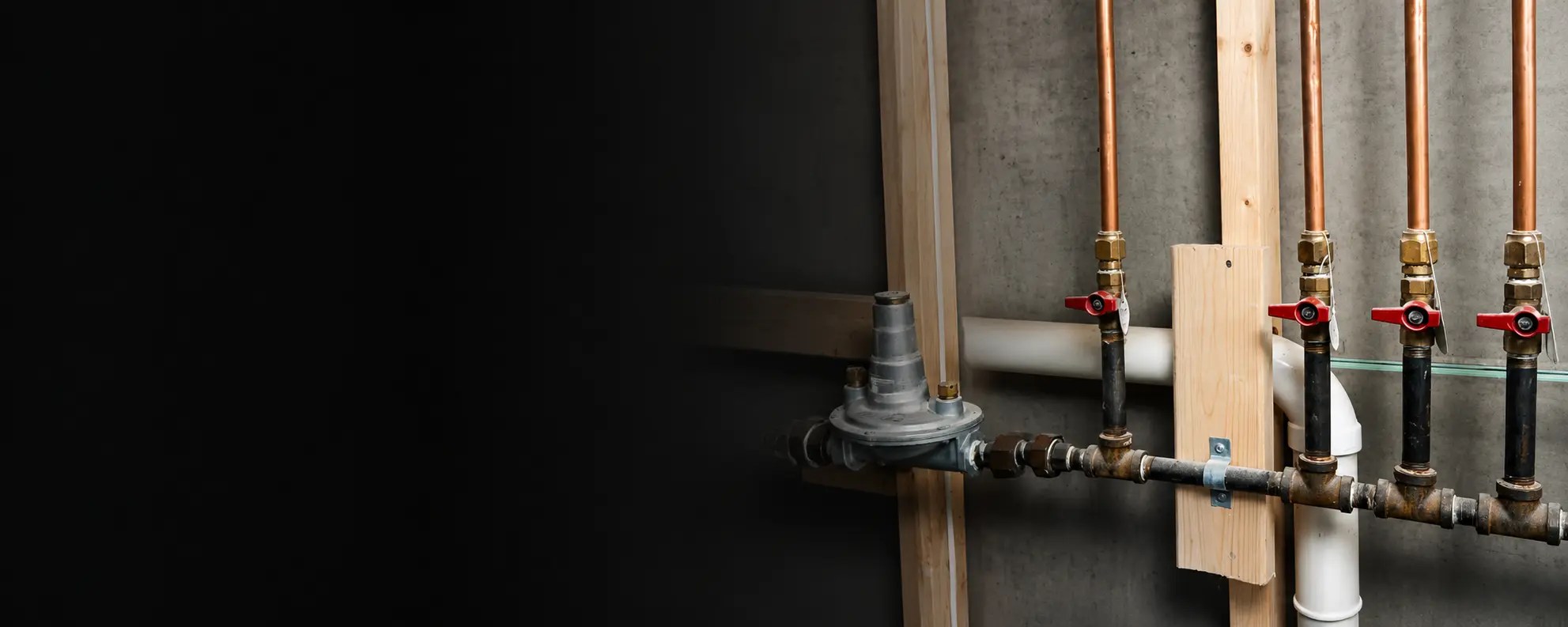
Most gas pipe faults we see in St Albans fall into a few patterns: a weeping compression fitting behind a cooker that has been pulled out once too often, copper pipe that has corroded where it runs through a damp floor void or an outside wall, steel pipework in older Victorian and Edwardian houses rusting at the threads, and pipes nicked by a screw or nail during kitchen or flooring work.
Every job starts with a tightness test at the gas meter. A gauge on the test point shows whether the installation is losing gas and how quickly, before we look for the exact spot. We then trace the leak with an electronic gas detector and leak detection fluid on the joints and fittings. If you would like the leak found first and quoted separately, that is our gas leak detection service.
Once we know the cause, we explain the options and agree the price before any work starts. A single failed fitting can usually be remade or replaced on the same visit. Where a run of pipe is corroded or was badly installed, replacing that section is often safer, and cheaper in the long run, than patching it. After the repair we tightness test the full installation again, purge the air out of the pipework, relight and check every appliance on the supply, and give you a written record of the test.
If the pipe feeds a cooker or hob, we can reconnect it with a new bayonet fitting and hose as part of the job, or fit a replacement through our gas appliance installation service. Where the fault is inside the boiler rather than the pipe feeding it, our boiler repair engineers take over. Landlords who need the work signed off can book it alongside a gas safety inspection.