

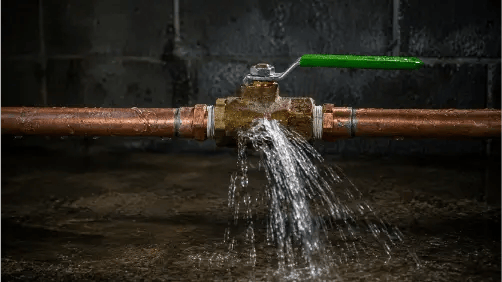
A burst pipe is one of the few plumbing problems where every minute counts. A 15mm pipe can release hundreds of litres an hour, and most of the damage we see in St Albans homes happens in the first half hour, before anyone has found the stopcock. Here is exactly what to do, in order.
Key points
- Turn off the water at the stopcock first, usually under the kitchen sink.
- Switch off the boiler, the immersion heater and any electrics near the water.
- Open the cold taps to drain the pipes, then contain the water and take photos.
- Call an emergency plumber: tape and towels will not hold a mains pressure pipe.
Turn off the water at the stopcock
The stopcock is usually under the kitchen sink. In older terraces around St Albans city centre it is sometimes under the floorboards in the front room, or in a cupboard near the front door. Turn it clockwise until it stops.
If it will not move, do not force it with a wrench, as old brass stopcocks can snap. Use the outside stop tap in the pavement instead, or call us and we will talk you through it.
Switch off the heating and hot water
Turn the boiler off at the switch or the fused spur next to it. If you have a hot water cylinder, switch off the immersion heater too. This stops the boiler running without water and stops hot water being pushed out of the damaged pipe.

Turn off electrics near the leak
If water is near sockets, light fittings or the consumer unit, switch off those circuits at the fuse board. If water is coming through a ceiling light, do not touch the light switch. Turn the circuit off at the board and keep everyone out of the room.
Drain the system and contain the water
Open all the cold taps and flush the toilets to drain the water still sitting in the pipes. If you have a cold water tank in the loft, open the hot taps as well. Put buckets under drips, move furniture and valuables, lift rugs and take photos of the damage and the pipe for your insurer.
Call an emergency plumber
Our 24/7 emergency plumbers in St Albans cut out the damaged section and replace it with new pipe and fittings, then check the rest of the run for weak joints. If you cannot see where the water is coming from, our leak detection service can trace it without pulling up the whole floor. For split or corroded pipework, see our emergency pipe repairs.
Why pipes burst in winter
Most of the burst pipes we repair between November and February are in lofts, garages, outside walls and under suspended floors, where the pipe is not lagged. Water expands as it freezes, the pipe splits, and the leak only starts when it thaws. If the heating also stops in a cold snap, it is often the same freeze: a frozen condensate pipe is the most common cause of low boiler pressure and lockouts in winter.
- Lag pipes in the loft, garage and under floors
- Keep the heating on low when you go away
- Fix dripping outside taps and fit an isolation valve
- Book an annual boiler service before the cold weather
Pipe burst right now?
We answer 24 hours a day and will talk you through making it safe while an engineer is on the way.
Frequently asked questions
Will my home insurance cover a burst pipe?
Most buildings and contents policies cover damage caused by an escape of water, but not always the repair to the pipe itself. Check your policy, keep your photos and keep our invoice.
How do I find my stopcock?
Look under the kitchen sink first. If it is not there, check the downstairs cloakroom, the cupboard under the stairs, near the front door or under the floorboards where the water main enters the house.
Can I use the water once the pipe is repaired?
Yes. We refill the system, bleed the air out and check for leaks before we leave, so you can use your taps and heating straight away.
How quickly can you get to me?
It depends on where you are and how busy we are, but we are based in St Albans and will give you an honest arrival time when you call.

Comments are closed